XYLEX · Institutional partnerships

XYLEX for schools and learning centres.

Help teachers identify a step where a learner may be stuck. The teacher confirms the suggestion before related practice follows.

拍懂 XYLEX

Draft for discussion. This proposed scope and the commitments below remain subject to review and a written agreement with the partner. Chinese source.

The relationship and boundaries

XYLEX is developed by HowHow Classroom and operated by 浩群數位科技. HowHow Classroom’s founder also teaches students directly. We disclose that relationship and set out the boundaries:

  • No student recruitment or diversion. Your students and brand remain yours. We will not proactively contact a partner’s students or parents to recruit them. XYLEX product screens, reports and notifications will not carry HowHow Classroom recruitment messages.
  • Separate data and contact lists. Institutional student information is used only to provide XYLEX. It does not enter HowHow Classroom’s student list and is not used for advertising.
  • Separate enquiries. Institutional discussions use the dedicated email subject on this page and are handled separately from parent enquiries.

We provide a tool for your teachers; your students remain yours.

Three proposed partnership models

Direct use

A school or learning centre uses XYLEX to photograph work, review AI-suggested difficulties, choose related practice and view learning reports.

Your institution
Your teachers remain responsible for review and teaching decisions.
Our role
We provide accounts, instructions and responses to questions.
Supported introduction

We help your teachers get started, align learning difficulties with your own materials, and organise regular learning reports.

Your institution
You nominate a contact person to review the introduction with us.
Our role
We arrange onboarding, materials alignment and regular reviews.

Joint educational development

Work together to expand learning-difficulty and practice content, or integrate XYLEX into the partner’s own product.

Your institution
Both parties agree specifications, schedules and ownership of results.
Our role
Arrangements are agreed in writing for each project.

Current availability of each model: 【TBC: XYLEX feature, subject and eligibility scope】

Scope and teacher responsibility

AI’s role
Suggest a possible step where the learner is stuck. It does not judge students or replace teacher marking.
Teacher’s role
Confirm, correct or reject every suggestion. Final judgement stays with the teacher.
Scope
Subjects, grades, class numbers and textbook editions are agreed in writing before cooperation, based on the pilot’s needs.
Pilot
Before starting, both parties agree what to observe, for how long, and who assesses the results. At the end, both review the findings before deciding whether to continue.
Data
We process only homework images and answer records needed for the service. We do not request student lists or identifying information. Data is deleted or returned after cooperation ends within the agreed period.

Actual app screens

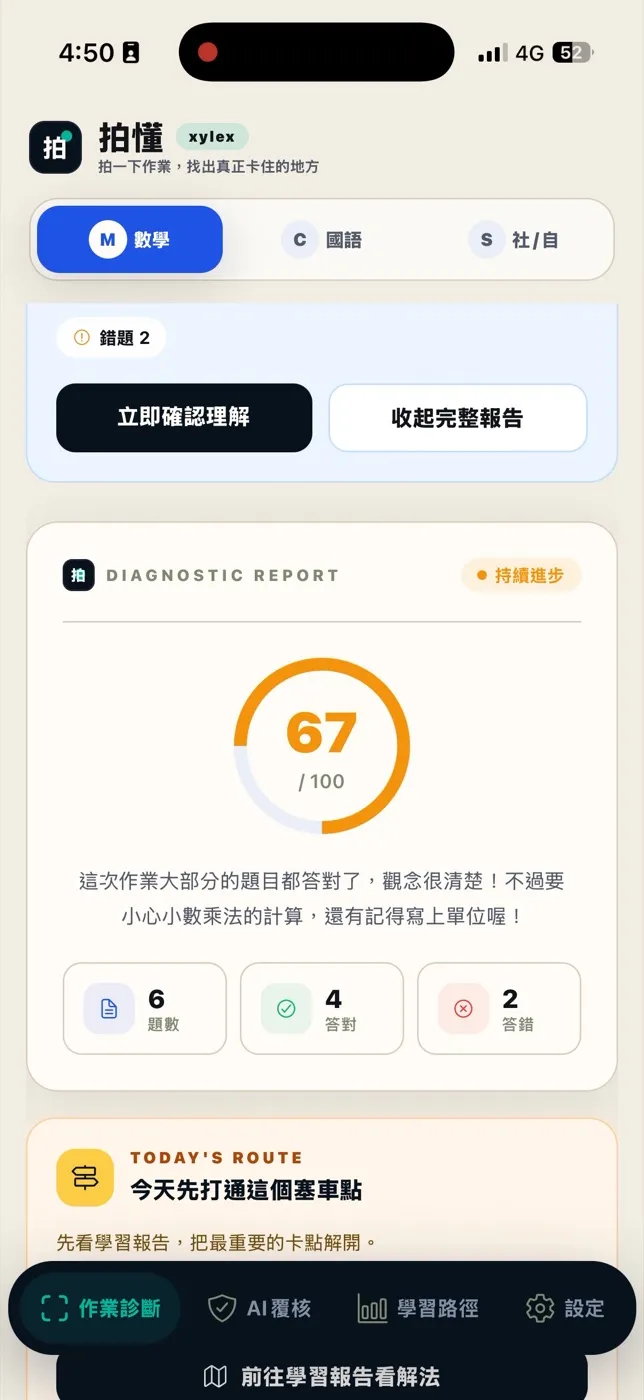
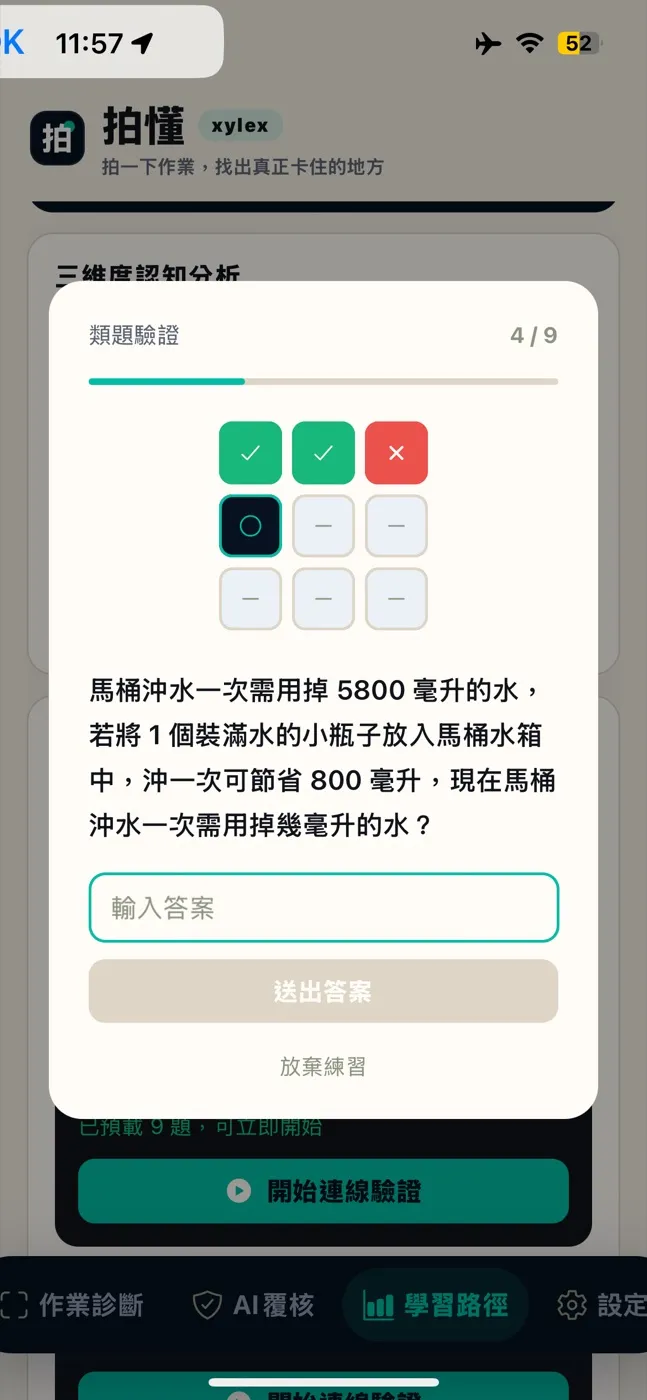
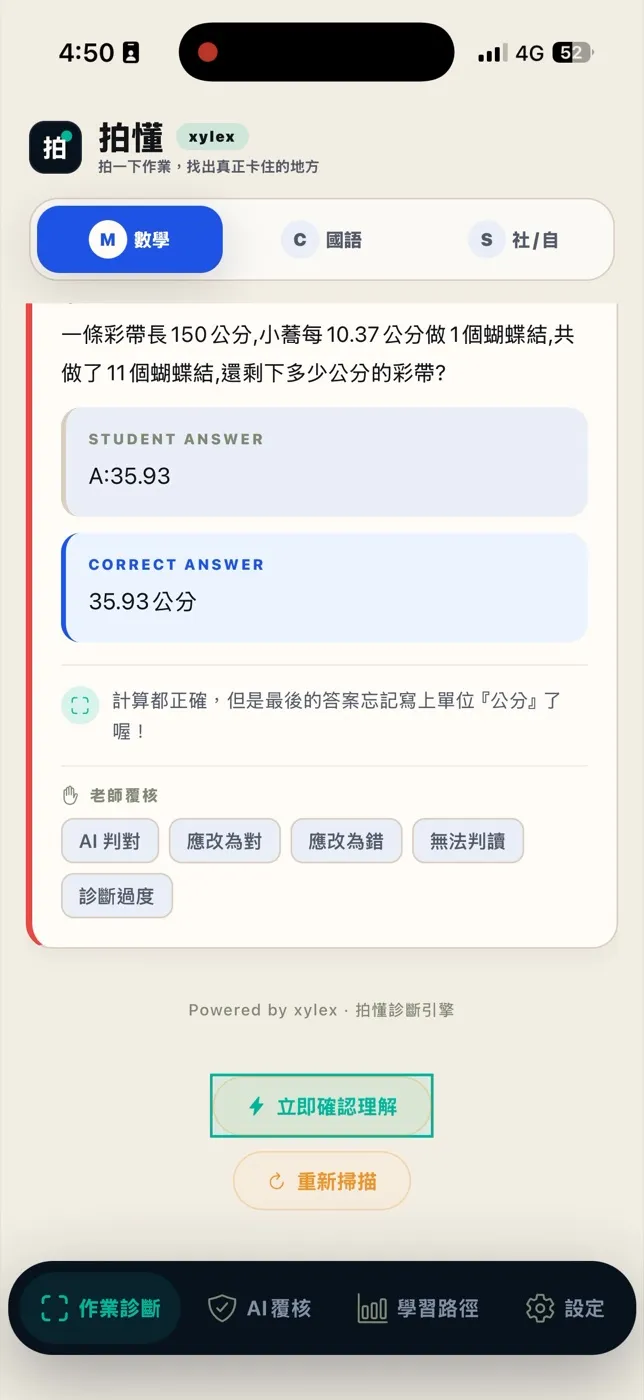
These screenshots show the Chinese interface. The work images have been checked for identifiable student information.

  • XYLEX Chinese interface with teacher controls to confirm, correct or reject an AI suggestion.

    Teacher review

  • XYLEX Chinese interface showing a diagnostic report and written learning feedback.

    Learning report

  • XYLEX Chinese interface showing follow-up questions and an answer field.

    Related practice

Current evidence and limitations

More than 10,000 reviewed questions
One record represents one question from daily homework at the founder’s own learning centre, as of October 2026. This is usage volume, not an accuracy or effectiveness measure.
Average maths score: 62.6 → 75.8 (+13.2)
Five students had paired midterm and final scores; all five improved. This is an early, small sample without a control group, so the change cannot be attributed to the product.
Marking time
Changes in marking time are currently based on user impressions. Formal timing is still in progress.

Dedicated institutional enquiries

The button opens an email template asking for:

  • Your institution’s name and your role.
  • The subjects and grades you hope to introduce.
  • Pilot needs: class numbers, timeline and the problem to address.
  • Your work email address.

Do not send student lists or any student personal information.